November 2025 Industrial Report: Smaller-Scale Industrial Properties Prove Resilient


Key Takeaways:
- Construction of industrial facilities smaller than 100,000 square feet is up 16% year-over-year (Y-o-Y), while larger facilities are down more than half in the same period.
- National average in-place rents rested at $8.73 per square foot at the end of October, up 5.7% annually. Lease spreads also continued shrinking across several markets.
- The national vacancy rate for industrial space stood at 9.6% in October, spiking by 240 basis points (bps) annually due to ripple effects of the substantial deliveries in recent years.
- Currently, 352.9 million square feet of industrial space is under construction nationally, which is equivalent to 1.7% of current stock.
- So far this year, $61.8 billion has changed hands in industrial transactions for an average of $136 per square foot. Recent interest rate cuts and the end-of-year scramble to close deals may contribute to a strong finish in 2025 in terms of sales.
- Western markets: After a period of protracted growth, rent appreciation is hitting the brakes with six out of nine markets notching rent growth below the national average.
- Midwestern markets: Industrial construction activity is beginning to pick up, with developers looking to capitalize on recent interest rate cuts and comparatively affordable labor and material costs.
- Southern markets: Regional industrial expansion continues, with Baltimore as the only Southern market with a declining pipeline year-over-year.
- Northeastern markets: Vacancies remain elevated in New Jersey and Boston, whereas lease spreads in Bridgeport lost some steam.
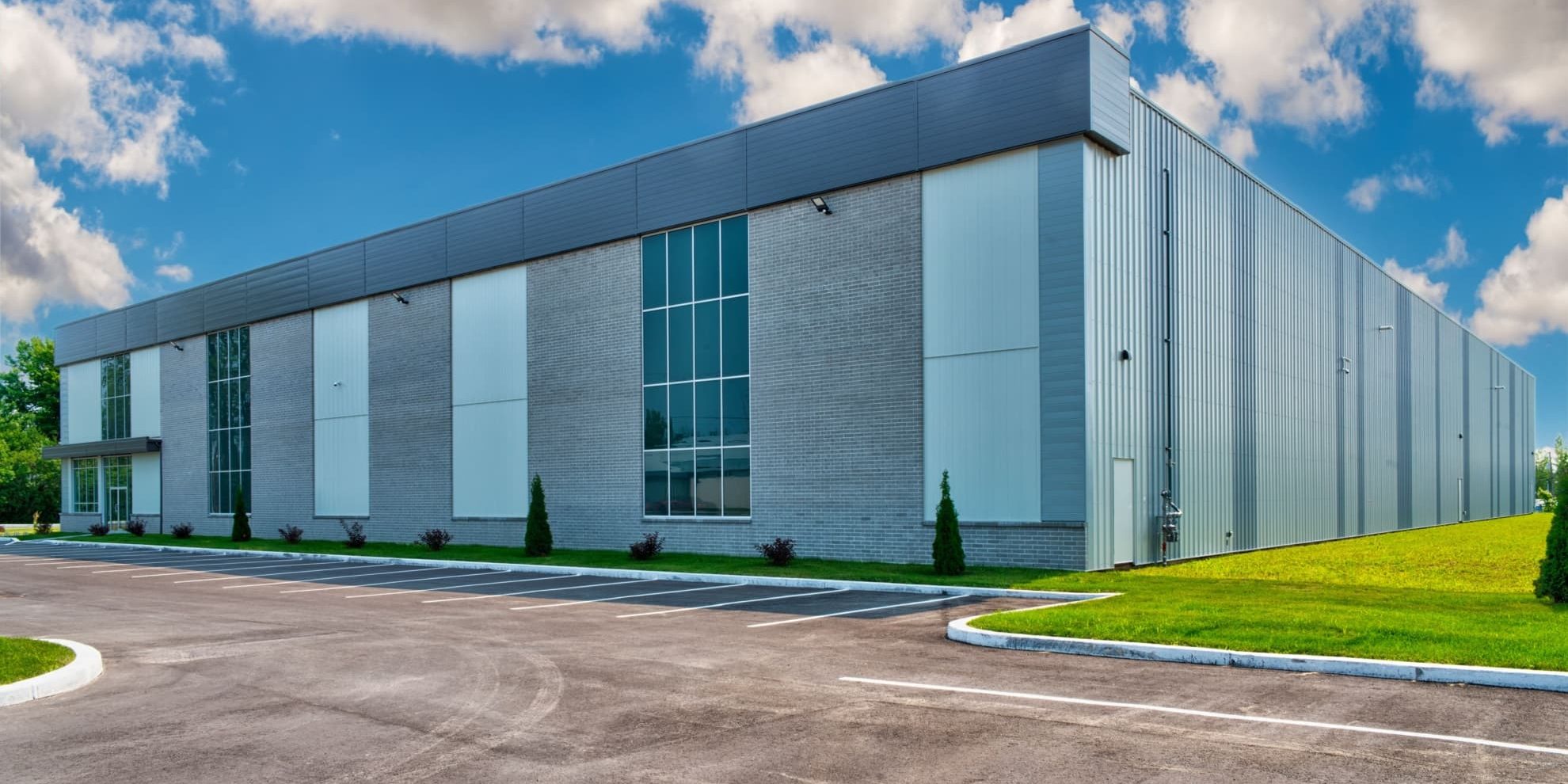
Small-scale industrial facilities serve a variety of tenants ranging from local distributors and last-mile delivery operations to light manufacturing. CommercialCafe’s U.S. industrial market report highlights that properties with lower total square footages have recently emerged as one of the most resilient segments of the industrial market recently, benefiting from shifts in supply chain management, urban logistics and consumer expectations.
Trends & Industry News
Development of Smaller-Scale Industrial Facilities Up 16% Y-o-Y
Thus far in 2025, 340 industrial facilities smaller than 100,000 square feet broke ground, according to our industrial market outlook. That figure is an increase of 16% compared to the same period in 2024, and not far behind the 397 properties that broke ground in the same period of 2022 amid a record-breaking construction frenzy.
For comparison, construction starts for facilities spanning more than 100,000 square feet total 600 in the first three quarters of 2025, almost halving from the 1,165 recorded in the same period last year. In other words, large facilities are bearing the brunt of the industrial development slowdown while smaller facilities may retain investor and occupier appetite, but large projects still outnumber smaller ones. Smaller-scale facilities generally require a more deliberate and targeted strategy compared to large properties built in the exurbs, likely contributing to the current development outlook.
“The 25,000-100,000 square foot segment has remained resilient and consistent in adding supply, even as we have seen starts for larger properties of 100,000+ square feet halve over the last 3 years.”
Peter Kolaczynski, Director, Yardi Research
While demand remains strong, maintaining the current level of construction may test developers’ creativity. Construction costs remain elevated in terms of land, construction and labor, particularly in the densely populated areas that smaller properties tend to be built in. And, although adaptive reuse of obsolete office properties and retail centers could provide one source of new space, but demolition and redevelopment is a more viable option in many cases.
Sustained tenant demand for small-scale industrial space is encouraging developers to provide solutions despite the headwinds. Specifically, the average sale price of industrial buildings smaller than 100,000 square feet has ballooned by 10.6% Y-o-Y compared to a more modest increase of 3.5% for properties larger than 100,000 square feet.
Our industrial real estate report indicates that the small-scale industrial sector will remain in favor in the coming years, thus providing challenge, as well as opportunity for investors and developers. As consumer demand for same-day delivery grows and companies seek to expand their last-mile delivery capabilities, well-positioned urban infill locations provide the most flexible solution.
Rents & Occupancy
Modern Industrial Space & Shipping Demand Maintains High Rent Growth in Miami
The national average in-place rent rate stood at $8.73 per square foot at the end of October, up $0.01 from September and increasing by 5.7% annually, CommercialCafe’s U.S. industrial market report shows.
Once again, Miami claimed the highest rent growth among all major industrial markets in the U.S. at 8.9% Y-o-Y. Here, rent costs are experiencing upward pressure from several sources, the foremost of which is the Port of Miami’s critical role in trade with Latin America and the Caribbean. The region is also one of the fastest-growing in the nation in terms of population, and the high cost of developable space is reflected in the rent rates.
Additionally, Miami delivered more than 19 million square feet of space since 2022 — resulting in a large share of expensive leases for these brand-new properties — but the market now also faces a supply squeeze with just 2.1 million square feet currently being built. The Miami industrial real estate market will likely see enduring demand, even as absorption of the space delivered in recent quarters takes longer.
At the same time, the spread between average in-place leases and those signed in the last 12 months continues to shrink, signaling a shift to a tenant-favored market: Leases signed in the last year average $9.85 per square foot, which is only $1.12 higher than the average national in-place lease and down from the $2.08 spread recorded one year ago.
The national industry vacancy rate stood at 9.6% at the end of last month, spiking by 240 bps Y-o-Y. The consequences of the significant amount of new supply are still being felt with vacancies likely to remain elevated in the coming quarters, per our industrial real estate report.
Supply
Data Centers Take Over Atlanta Industrial Pipeline
At the end of last month, 352.9 million square feet of industrial space was under construction nationwide, according to our industrial construction outlook. That amount will expand national stock by 1.7%, while properties currently in the planning phases total another 1.7% of current inventory. Industrial construction projects started so far in 2025 span 217.7 million square feet of space.
The Atlanta industrial market delivered 41 million square feet of new space during the 2020-2023 construction boom, with our U.S. industrial market report indicating that 87% of that new inventory being in warehouse and distribution facilities. However, Atlanta industrial space development has since diverged from national trends: In the last two years, more than half of the industrial construction starts in this market have been data center properties, showcasing growing demand in the segment.
Demand for data center space in Atlanta is among the most robust nationwide, with many cloud providers and AI firms gravitating here. In this case, a strong fiber internet network, competitive power costs and advantageous tax rates increase its appeal, contributing to Atlanta’s transition into a key hub in the national data center network.
Transactions
Year-End Transaction Spike Likely, Secondary Submarkets in Charlotte Record Heightened Sale Activity
Our industrial real estate market study found that year-to-date industrial transactions totaled $61.8 billion nationally at the end of October, while properties traded for an average of $136 per square foot.
We predict a strong end to 2025 in terms of industrial real estate transactions. Historically, the fourth quarter of the year brings spikes in commercial real estate transactions as investors rush to close deals before the year ends for a clearer tax picture and to meet annual performance targets.
This tendency will likely be amplified by the two interest rate cuts from earlier in the year. While still elevated, comparatively lower borrowing costs may encourage private equity to deploy dry powder being kept on the sidelines which currently amounts to hundreds of billions of dollars.
Despite a market-wide shift to measured industrial growth, investor appetite for industrial real estate in Charlotte, N.C., remains high. Yet, even as vacancies ticked up significantly after the recent supply boom, new deliveries have not extinguished demand for well-positioned, modern space near transportation corridors.
Charlotte’s Airport submarket, in particular, is experiencing durable demand, but sales in Iredell County to the north have accelerated significantly this year. As a matter of fact, Eaton Vance — a Morgan Stanley-owned investment group — spent $139 million for the Statesville Operations Distribution Center in Iredell County, marking the sale of industrial space in Charlotte this year.
Western Markets
6 of 9 Western Entries Record Rent Growth Below National Average
Industrial construction activity demonstrated early signs of recovery across several Western markets in October, although development pipelines continued lagging behind prior-year benchmarks. A series of major project launches in California’s Inland Empire elevated the market’s total space under construction to 7.2 million square feet, nearly doubling September’s figure but remaining 29% below the volume underway in October 2024. Phoenix followed a similar trajectory with its pipeline expanding from 16 million square feet to 18 million month-over-month while still trailing considerably behind last year’s robust 33.8 million square feet. Among Western markets, Seattle industrial space is slated to expand the most with the pipeline surging from 2.2 million square feet one year ago to 3.7 million square feet at the end of October.
Industrial vacancy rates across several Western markets appeared to be near peak after a protracted period of upward momentum. Denver, the Central Valley and Portland each recorded no month-over-month vacancy changes, although all of these markets recorded substantial year-over-year increases of 410, 490 and 390 bps, respectively. Additionally, Denver retained its position as the nation’s loosest major industrial market with a vacancy rate of 13.4%. In contrast, California’s major logistics hubs maintained vacancy levels below the national benchmark of 9.6%, with Orange County posting 8.0%, the Inland Empire at 8.1%, Los Angeles at 8.4% and the Bay Area at 8.8%.
Meanwhile, leasing dynamics in October continued their pivot toward tenant-favorable conditions across most markets in the region. In fact, six of the nine Western markets in our study experienced rent growth rates trailing the national average, including Los Angeles (4.8%), Portland (4.9%), Denver (5.1%), California’s Central Valley (5.4%), Phoenix (5.6%) and the Bay Area (5.7%). The Inland Empire led the region with 6.8% annual rent appreciation and commanded new lease premiums of $2.50 per square foot — the widest spread among Western markets. Nevertheless, even this regional leader ranked only sixth nationally for rent growth, contrasting with the recent boom cycle when industrial rents throughout the West routinely climbed at double-digit annual rates.
Last month, a flurry of industrial transactions propelled metro Portland’s year-to-date sales volume to $453 million, more than doubling the figure it recorded at the end of September. Notable deals included In-N-Out Burger’s acquisition of a 71,600-square-foot facility in the Airport Way submarket and a real estate investment firm’s $113.5 million purchase of the Amazon PDX9 distribution center in Troutdale, Oregon. However, the Central Valley claimed the largest increase in sales compared to year-ago totals, with transactions here adding up to $1 billion — far surpassing the $437 million recorded during the comparable period in 2024.
Midwestern Markets
Lease Spreads Flatten, Pipelines Gain Momentum
As the calendar year draws to a close and investors accelerate efforts to finalize transactions, the Midwest continued distinguishing itself as a region with compelling investment fundamentals, as evidenced by robust transaction volumes. Year-to-date sales for industrial properties in Indianapolis totaled $687 million at the end of October, representing a monthly increase of almost 50% and a 162% surge compared to the $262 million recorded during the same period in 2024. Likewise, industrial real estate in Columbus experienced comparable momentum with $1.2 billion in transactions after climbing 41% month-over-month and 108% year-over-year. Kansas City also maintained its strong sales trajectory, reaching $729 million year-to-date at the end of October.
Construction pipelines throughout the Midwest began expanding in October, signaling that developers are responding to Federal Reserve rate cuts and capitalizing on the region’s comparatively affordable labor and construction costs. Notably, Minneapolis-St. Paul and Cincinnati posted the second- and third-highest annual pipeline growth rates nationally at 241% and 139%, respectively. Industrial space under construction in Indianapolis also more than doubled compared to October 2024, despite experiencing a modest month-over-month decline. That said, Chicagoland now maintains the Midwest’s largest pipeline and the fifth-largest nationwide at 11.3 million square feet, following a series of high-profile groundbreakings including two speculative developments in Bartlett, Ill., and Joliet, Ill., that are being constructed by Mapletree.
Tenants continued gaining leverage in lease negotiations across several Midwestern markets at the onset of the fourth quarter. Minneapolis-St. Paul was the sole regional market commanding new lease spreads above the national average of $1.12 per square foot, with premiums reaching $1.42. Otherwise, in the region’s remaining markets, lease spreads ranged from $0.43 for industrial space in Detroit to negative in several markets, indicating that recently signed leases matched or undercut average in-place rates across multiple locations. In fact, among the six major markets nationwide recording negative lease spreads in October, four originated from the Midwest.
At the end of October, several Midwestern markets ranked among the nation’s tightest in terms of occupancy. Kansas City emerged as the standout with a vacancy rate of 4.9% — the lowest in our industrial real estate study and representing a 30-basis-point annual decrease. Next, Detroit followed closely at 6.2% to claim the third-lowest rate nationwide, while St. Louis’ 6.9% vacancy rate secured the fifth position nationally. Even so, select markets throughout the Midwest continued grappling with elevated vacancies as the oversupply correction persists. Namely, Chicago industrial space vacancies reached 12.7% after climbing sharply year-over-year, while Columbus recorded an elevated rate of 13.1% in October.
Southern Markets
Baltimore Only Southern Market with Shrinking Industrial Pipeline Y-o-Y
At the end of October, only three Southern markets reported industrial vacancy rates below the national average. Houston led regionally with a vacancy rate of 6.6%, achieving a rare 50-bps decrease Y-o-Y, while Nashville recorded 7.7% and Atlanta posted 8.7%. Otherwise, the region’s remaining markets exhibited vacancy rates spanning from 9.9% in Baltimore to 12.5% in Memphis. Charlotte registered the most substantial vacancy increase in the region after hiking up by 710 basis points compared to last year, followed by Miami’s 640-bps annual increase.
The Miami industrial market also emerged as a focal point for occupiers seeking to establish footholds in one of the nation’s most rapidly expanding port markets. Granted, industrial rents in Miami already command premium rates at $12.91 per square foot, making it the sole Southern market exceeding the national average — a distinction otherwise monopolized by Western and Northeastern markets. Moreover, rental growth showed no signs of moderating in Miami, with the annual appreciation rate reaching 8.9% as of October — the highest nationwide. Atlanta trailed closely at 8.8%, while Dallas-Fort Worth and Tampa claimed the fourth- and fifth-fastest rent growth nationwide, respectively. The Tampa industrial market also distinguished itself with a spread of $4.21 per square foot between recently signed leases and in-place rates — the second-widest premium nationwide, narrowly trailing first-place Bridgeport, Conn. With its $4.30 spread.
Average industrial sale prices throughout the South remained accessible relative to other regions, our U.S. industrial market report outlines. In this case, Baltimore was the only market commanding prices above the national benchmark, averaging $189 per square foot compared to the national figure of $136. Atlanta averaged $134 per square foot, representing an 18% increase from the price recorded 12 months earlier. Further back, Industrial space in Houston traded for an average of $95 per square foot year-to-date, while Memphis industrial properties averaged $67 per square foot to establish it as the third most affordable major market nationwide. In terms of total transaction volume, Dallas-Fort Worth maintained national leadership with $5.3 billion in year-to-date sales, while Houston’s $2.2 billion and Atlanta’s $2 billion represented the region’s next-largest tallies.
Nationwide, industrial development activity declined marginally by 2.7% Y-o-Y. However, several Southern markets attracted substantial developer interest that bucked the broader trend. Houston exemplified this momentum the most dramatically, with its industrial pipeline now approaching 21 million square feet to surpass even the approximately 18 million square feet that was underway at the start of 2022. This volume is projected to expand Houston’s industrial inventory by an estimated 3.1%. Next, Memphis positioned itself for an even more substantial expansion of 4.2%, supported by the 12.6 million square feet currently under construction. Dallas-Fort Worth’s development pipeline totaled 31 million square feet after surging 102% Y-o-Y, while Tampa’s current 3.5 million square feet represented an 83% annual increase. Notably, Baltimore stood as the region’s sole market experiencing development contraction, with its pipeline declining by nearly one-quarter compared to October 2024.
Northeastern Markets
New Jersey & Boston Still in Double-Digit Vacancy Territory
Our industrial property market report underscores that all major Northeastern industrial markets recorded annualized rent growth exceeding the national average of 5.7%. In this region, Bridgeport, Conn., experienced rent appreciation of 5.9%, bringing average in-place rates to $9.89 per square foot alongside a new lease premium of $4.30. This represents a normalization from the more than $5-per-square-foot premium recorded earlier in the year. New Jersey retained its position as the Northeast’s most expensive market for industrial leasing at $12.12 per square foot, followed by Boston’s $11.52 average lease rate.
Regional pipelines saw minimal fluctuations in the Northeast in October, continuing to hover around 1% of existing inventory across all markets. Industrial space under construction in Bridgeport and Boston remained largely stable month-over-month, with the markets’ respective pipelines of 1.6 million and 2.7 million square feet remaining mostly unchanged, but still above year-ago totals. And, while New Jersey’s construction activity accelerated compared to the previous month, it nevertheless trailed slightly behind last year’s 6.8 million square feet, whereas Philadelphia’s pipeline has yet to recover after declining by more than half from October 2024’s robust 12.7 million square feet.
New Jersey also maintained its distinction as the Northeast’s most expensive market for industrial transactions, commanding an average price of $228 per square foot in year-to-date deals — nearly $100 above the national benchmark. Boston followed at $167 per square foot, while Philadelphia and Bridgeport remained below the national average at $125 and $70 per square foot, respectively. Examining total transaction volumes, Philadelphia surpassed $1 billion in October, representing a more than 50% increase compared to its sales volume at the corresponding point last year. Bridgeport accumulated $252 million in year-to-date sales, also marking a 33% annual gain.
Vacancies in New Jersey ticked up to 11.4% last month, resulting in a 280-bps increase compared to one year prior. Similarly, the region’s remaining markets also contended with rising vacancy pressures: Philadelphia’s industrial vacancy rate stood at 8.6%, up 250 bps on the year; Boston reached 10.6%, climbing 220 bps; and Bridgeport maintained its status as one of the nation’s tightest markets at 5.7%, though diminishing new lease premiums may signal a potential reversal in the coming quarters.
Economic Indicators
Uncertainty Contributes to Slowdown in Southern California Shipping Volumes
Several key economic indicators have been delayed by the government shutdown, but alternative data sources still provide important insights in terms of general industry conditions. For example, shipping container volumes indicate a slowdown in imports, which may have repercussions for industrial real estate as well as the economy as whole.
The Ports of Los Angeles and Long Beach handle approximately 40% of all inbound container shipping. In September, the amount of imported twenty-foot equivalent units (TEUs) at the two ports fell by 10.2% after a further 6.6% drop the previous month. The current figure is also down 7.3% compared to September 2024. The slowdown in imports is especially significant as Q3 normally sees imports peak for the year as retailers build up inventories for the upcoming holiday season.

At the same time, it’s also worth noting that July 2025 brought an all-time high in combined TEUs volumes as firms scrambled to take advantage of a pause in tariffs on imports from China. So, as inventories remain elevated from the summer import glut and policy uncertainty prevails, the result could be softening demand for industrial space in the region in the short term. However, our U.S. industrial market report identified strong fundamentals for Southern California, with their status as critical cogs in global supply chains being highly unlikely to change.
Methodology
The monthly CommercialCafe national industrial real estate report considers data recorded throughout the course of 12 months and tracks top U.S. industrial markets with a focus on average rents; vacancies (including subleases, but excluding owner-occupied properties); deals closed; pipeline yield; forecasts; and the economic indicators most relevant to the performance of the industrial sector. Listing rate and occupancy information was based on Yardi Research data.
- Average Rents: Provided by Yardi Market Expert, a cutting-edge service that uses anonymized and aggregated data from other Yardi platforms to provide the most accurate rental and expense information available.
- Vacancy: The total square feet vacant in a market, including subleases, divided by the total square feet of industrial space in that market. Owner-occupied buildings are not included in vacancy calculations.
Stages of the supply pipeline:
- Planned: Buildings that are currently in the process of acquiring zoning approval and permits, but have not yet begun construction.
- Under Construction: Buildings for which construction and excavation has begun.
Sales volume and price-per-square-foot calculations for portfolio transactions or those with unpublished dollar values are estimated using sales comps based on similar sales in the market and submarket, use type, location and asset ratings, sale date and property size.
Year-to-date metrics and data include the time period between January 1 of the current year through the month prior to publishing the report.
Market boundaries in the CommercialCafe industrial report coincide with those defined by the CommercialCafe Markets Map and may differ from regional boundaries defined by other sources.
Fair Use & Redistribution
We encourage you and freely grant you permission to reuse, host, or repost the research, graphics, and images presented in this article. When doing so, we kindly ask that you credit our research by linking to CommercialCafe.com or this page so that your readers can learn more about this project, the research behind it and its methodology. For more in-depth, customized data, please contact us at [email protected].



Lucian Alixandrescu
Senior Content Writer, CRE Industry Reports & Studies
Lucian is a senior content writer for CommercialCafe, specializing in commercial real estate research and data-driven reporting since 2019. With deep expertise in industrial real estate, office markets, demographics, and economics, he produces comprehensive market studies and insights on national and regional CRE trends. He also reports on adjacent subjects such as population shifts and the job market. His reports have been cited by and featured in The New York Times, Forbes, NBC, Bisnow, The Business Journals, and Yahoo Finance. Lucian holds a background in language and literature studies and brings more than 5 years of previous freelance writing experience to his commercial real estate journalism.