YTD Office Sales Near $43B as Key Markets Carry Bulk of Pipeline & Loan Maturities Pressure Burdened Markets


Key Takeaways:
- In August, the national office vacancy rate was 17.8% following a decrease of 90 basis points (bps) year-over-year (Y-o-Y).
- The national office listing rate averaged $33.20 per square foot last month, which was 1.7% higher than values recorded in August 2025.
- Nationally, the office supply pipeline picked up to reach roughly 32.4 million square feet of office space under construction last month.
- With more than $5.1 billion in deals closed since the start of the year, Manhattan, N.Y., topped the list for sales. It was followed by California’s Bay Area ($3.4 billion), as well as Dallas ($3 billion) as the only other markets to exceed $3 billion in year-to-date sales.
- Among the seven large U.S. office markets where vacancy was below the national average, Manhattan, N.Y.; Miami; and Los Angeles averaged the lowest vacancy rates in August.
- Last month, Western and Northeastern U.S. markets had most of the leasing rates that were above the national average, while Southern and Midwestern markets made up the majority of markets with asking rates below the national average.
- Manhattan, N.Y.; Boston; and Dallas had the most active construction pipelines. Last month, they were the only markets where more than 3 million square feet of new office space was in development. In total, these three accounted for more than 32% of the national pipeline total in August.
Trends & Industry News
Approaching Loan Maturities Create Uncertainty in Office Sector
Risk and uncertainty in the U.S. office sector looks poised to grow. That’s because increasingly volatile economic conditions are likely to compound the challenges stemming from office loan maturities, which are expected to peak throughout the next few years.
According to Yardi Matrix research data, 14,000 office properties are encumbered by loans that have recently matured or are due to mature by the end of 2028 with loans totaling $289.2 billion — 33.5% of total loan volume. Nearly 59% of these loans originated before 2021 with the baked-in assumption that high demand would sustain loan obligations through maturity.
However, with office-using jobs declining since mid-2023, existing demand being concentrated largely in the highest quality assets and hybrid work putting down persistent roots (among other factors), pressure is building as office loans approach maturity.
“The office debt problem is not going away yet. With interest rates and stubbornly low physical occupancy both adding to the headwind, the expectation is for increased delinquencies and distress.”
Peter Kolaczynski, Director, Yardi Research
Plus, neither struggle nor recovery have been evenly spread among top markets in the U.S. For example, eight of the 25 largest metros we surveyed for this report had vacancy rates above 20% last month. Meanwhile, maturing loan volume in high-vacancy metros totals $61.6 billion and accounts for 7.1% of all office loans.
Specifically, in Seattle, which is contending with a 24.7% vacancy rate, 70.1% of the local $8.3 billion in maturing loan volume originated before 2021. High-risk metros also include California’s Bay Area, where vacancy was at 22.8% and 64% of the $13.5 billion in maturing loans originated prior to 2021. Similarly, Portland, Ore., (23% vacancy) is looking at 55.9% pre-2021 loans out of its $1.5 billion that are approaching maturity.
Likewise, markets where more than half of maturing loans originated before 2021 also include San Francisco (25.9% vacancy, $12.6 billion maturing loans, 55.1% pre-2021) and Houston (23.6% vacancy, $7.3 billion maturing, 50.9% pre-2021).
Moreover, as these loans mature, the levels of distress are likely to increase further due to the widening gap in funding: According to recent reports by Trepp, the CMBS delinquency rate for office loans rose to 12% in August. And, during the last few years, nearly half of all repeat-sale office properties changed hands at a discount to their previous price tag. As such, office property values are likely to remain under pressure until the wave of maturities subsides. Of course, as interest rates remain elevated, prospects for refinancing have also diminished.
Listing Rates & Vacancy
Manhattan, N.Y., Performance Stands Out Among Major Metros
The national average full-service equivalent listing rate for office space was $33.20 per square foot last month after an increase of 1.7% Y-o-Y. At the same time, the national vacancy rate dropped 90 bps compared to the previous year to rest at 17.8% at the close of August.
Notably, of the 25 largest markets that we analyzed, 13 saw decreases in their respective vacancy rates when compared to August of last year. At the higher end of the spectrum, some of the top markets we surveyed continue to struggle with office vacancy holding above 20%.
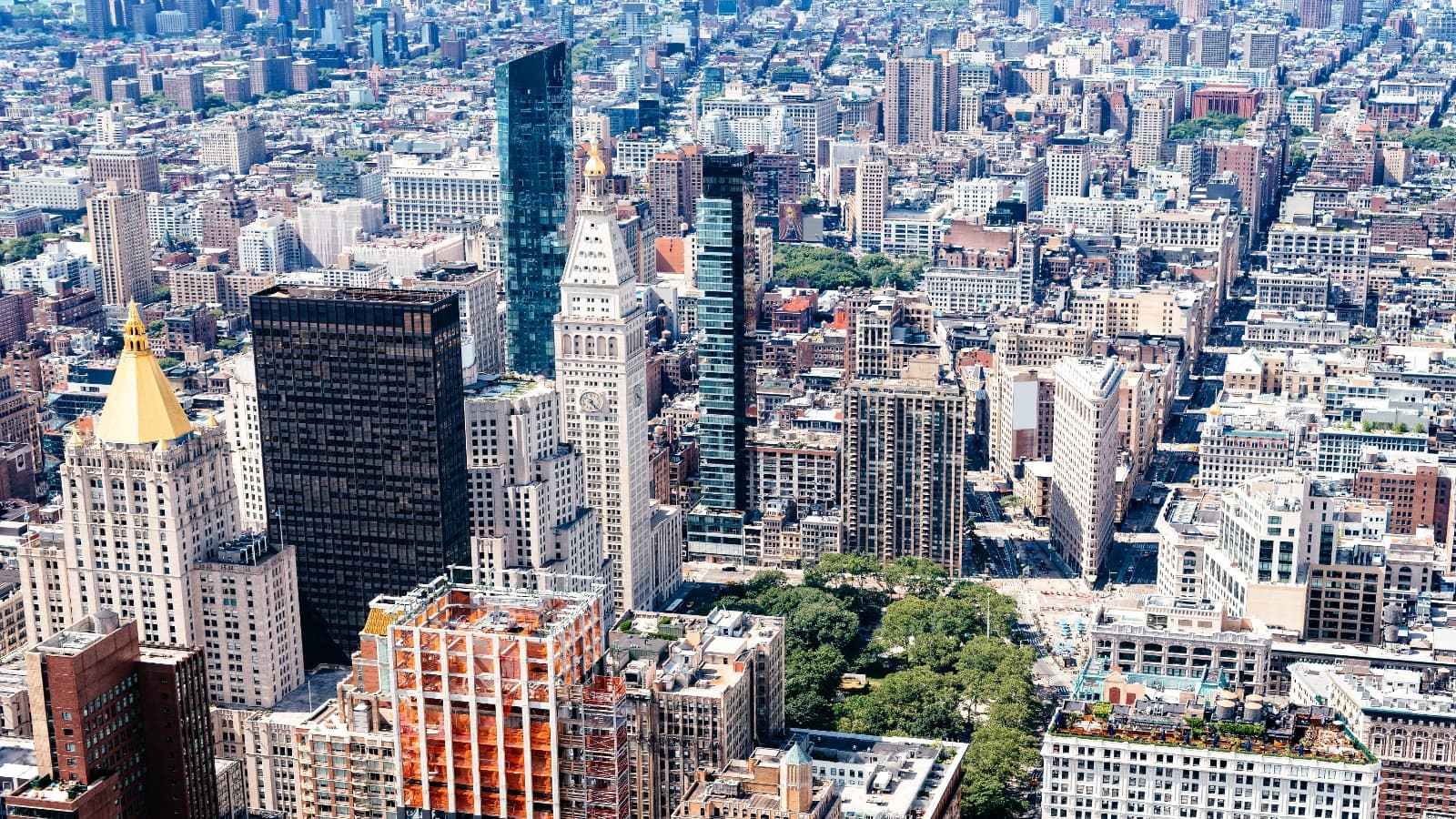
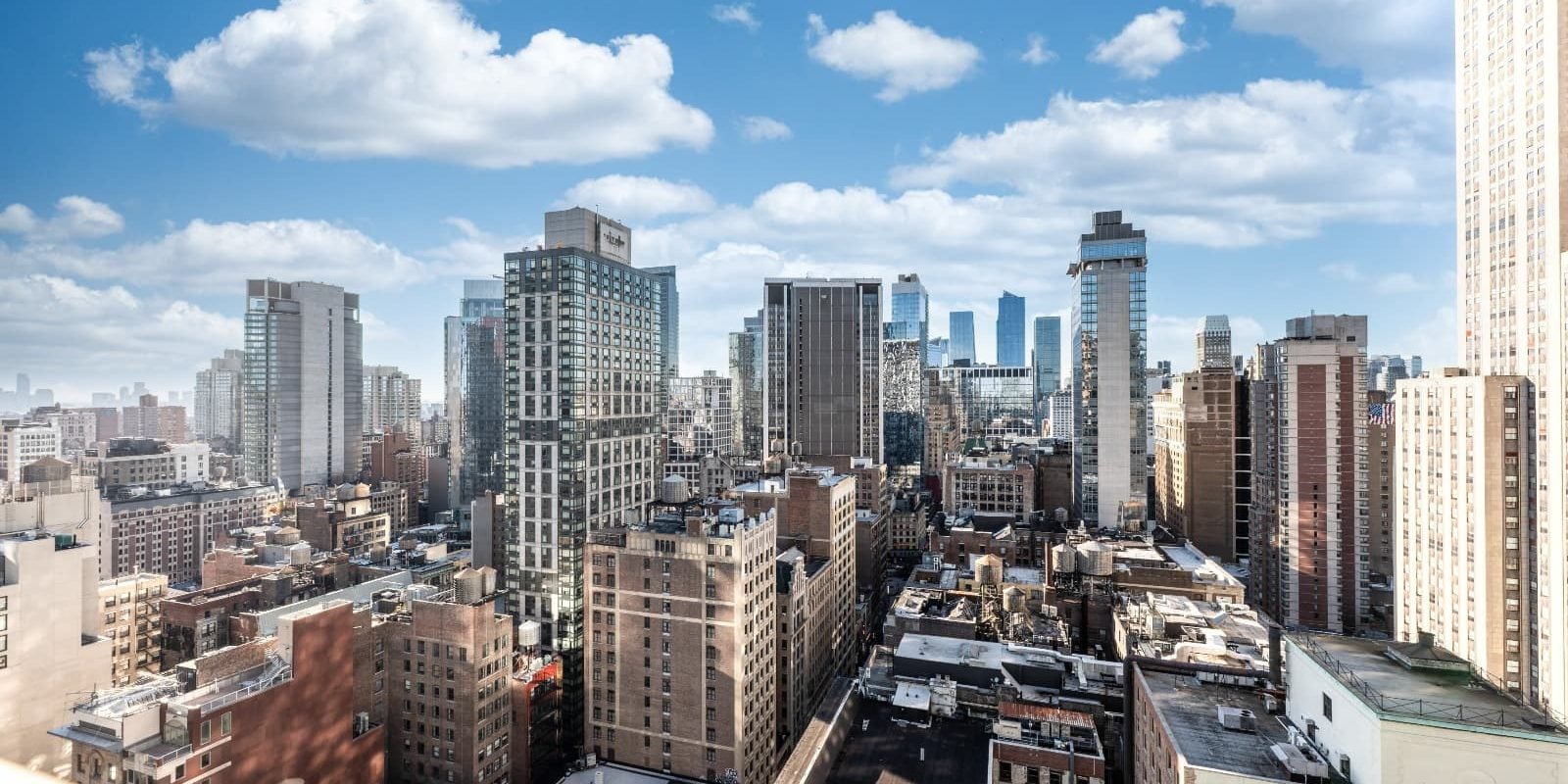
The lowest vacancy rate among the top 25 U.S. metros was in Manhattan, N.Y. Marking a 340-bps Y-o-Y drop, office vacancy here was a little more than 10% last month. Supported by the continued flight-to-quality trend, class A office properties consistently outperform other classes in the metro. Accordingly, in August, vacancy for class A Manhattan office space was at 9%, while class B properties were at 12.2% and the class C segment averaged 14.3%.

Transactions
Atlanta Office Sale Prices Land 33% Below 2022 Peak
In August, year-to-date office sales added up to nearly $43 billion across 1,850 transactions, while sale prices averaged $205 per square foot. What’s more, a total of 19 of the top 25 metros we analyzed for this report saw overall sales in excess of $500 million during the first eight months of 2026. Among them, 11 markets saw more than $1 billion each in year-to-date sales.
Last month, year-to-date office sales in Atlanta surpassed $875 million. Although prices in the Georgia market have seen an uptick recently, the year-to-date average sale price here approached $158 per square foot — down 32.8% from its $235-per-square-foot peak in 2022, but only falling 7.1% from 2019 prices.
Granted, transactions of properties selling at a discount have been a noteworthy occurrence across major markets in the U.S., and Atlanta is no stranger to this trend. One example is a sale that closed in June in which Real Capital Solutions acquired the 650,000-square-foot office building located at 101 Marietta St. from The Dilweg Companies. The new owner paid $49.5 million for the property, which was a roughly 28% discount from its previous change of hands in 2015, when the property commanded nearly $69 million.

Supply
Office Construction Sparse in Central Business Districts
As of August, more than 32 million square feet of office space was under construction in the U.S. markets we tracked for this report. Looking at individual market pipelines, three of the 25 markets we analyzed each had more than 3 million square feet in development last month — Manhattan, N.Y.; Boston; and Dallas.
Then, in fourth place, was Miami, where 2.22 million square feet was in development at the close of August. Otherwise, San Diego (1.31 million square feet in the pipeline) and Los Angeles (1.26 million) were the only other markets where developers had more than 1 million square feet of space in the works.
Combined, these six markets accounted for nearly 47% of the modest national office construction pipeline last month.
Notably, as the persistent flight-to-quality trend continues to concentrate demand into fewer properties, office assets in central business districts (CBDs) have struggled to maintain their values: Since 2024, 73% of properties sold in CBDs with two or more sale prices for comparison have traded at a discount, as compared to 48% of urban transactions and 42% of suburban sales.
Consequently, this has translated into a more modest construction pipeline. According to Yardi research data, office space currently in development in CBDs adds up to just 2.7 million square feet (0.2% of stock), which is down 61.3% from August of last year. This level of activity was also in significant contrast to the urban pipeline outside of CBDs, which totaled 17.2 million square feet (1.2% of stock) in August — down 4.1% Y-o-Y — as well as the suburban pipeline, which was at 12.4 million square feet last month (0.3% of stock), dropping 18.8% from 12 months prior.

Western Markets
San Diego & Los Angeles Lead Office Construction
Vacancy rates were above the national average of 17.8% in August in the majority of the Western U.S. markets that we surveyed for this report. With the exception of Los Angeles (14.5% vacancy) and Phoenix (17.2%), all markets we analyzed in this region averaged vacancy rates at or higher than 20% last month.
More precisely, vacancy for office space in San Francisco(opens in new tab) was the highest in the region, averaging nearly 26% in August. Next, Seattle was second with vacancy averaging 24.7% last month. In the same vein, San Diego was at 24.2% vacancy — the one other large market in the region to exceed 24% last month.
San Francisco also topped the regional list for listing rates: Asking rates here averaged a little more than $65 per square foot in August, which was roughly double the national average of $33.20.
Nearby, Bay Area office space in California remained the second-priciest in the region last month with asking rates averaging $56.29 per square foot — the only other Western U.S. market on our list where average rates surpassed $50 per square foot in August.
Not to be outdone, the Los Angeles market (#3) and office space in San Diego(opens in new tab) (#4) each averaged more than $40 per square foot — the only other markets in the region to do so — and closed out the standout block of California markets ranking at the top of the list for asking rates.

Otherwise, Portland, Ore.; Phoenix; and Denver remained the only large markets in the Western U.S. where office asking rates were below the national average in August, each averaging close to or less than $30 per square foot.
Next, when looking at office sales in the region, data showed that California markets continued to hold a comfortable lead. In this case, California’s Bay Area — which saw more than $3.4 billion in sales close during the first eight months of the year — took the top spot, followed by the neighboring San Francisco market, where year-to-date transactions reached nearly $2.8 billion. In fact, at the close of August, they were the only two Western U.S. office markets where sales had surpassed the $2-billion mark.
Further south, Los Angeles commanded the third-highest sales total in the region so far this year ($1.6 billion). It was followed by sales of Phoenix office space, which added up to $929 million since the start of the year through August. Next, San Diego and Denver were the only other Western U.S. markets to see office sales exceed $500 million during the first eight months of the year.
Of course, high-profile assets in gateway markets continue to command top-tier prices. Namely, San Francisco office sales closed through August averaged $536 per square foot, which was the highest in the region last month. At a distance, California’s Bay Area ($355 per square foot) and Seattle ($306) were the second- and third-most expensive office investment destinations in the Western U.S. last month.
California markets also led the region in terms of development in August: San Diego had a little more than 1.31 million square feet under construction, followed by Los Angeles, where 1.26 million square feet was under development. Together, they accounted for nearly 46% of the roughly 5.6 million square feet currently in the pipeline across the largest markets in the Western U.S. region.
Midwestern Markets
Chicago YTD Office Sales Approach $1.3 Billion
The top Midwestern U.S. office markets we looked at for this report remained some of the most affordable in the country in August, both in terms of average listing rate and for-sale price per square foot.
In this region, asking rates for Detroit office space(opens in new tab) were the most accessible with rates here averaging $20.85 per square foot. Next, the average asking rate for office space in Minneapolis(opens in new tab); St. Paul, Minn.; and the wider Twin Cities metro submarkets rested at $27.35 per square foot. At the same time, office vacancy in the Minnesota metro was the closest to the national average among the top Midwestern markets we analyzed.
Unsurprisingly, Chicago office space(opens in new tab) was the region’s priciest for leasing in August with asking rates here averaging $28.38 per square foot. That said, occupancy levels in the Illinois market last month kept vacancy above 19%, which was the highest in the region last month.

The highest regional office sales total so far this year was also in Chicago: By the end of August, the largest office market in the Midwest had seen nearly $1.3 billion worth of office space change hands since the beginning of the year. Then, at quite a distance, year-to-date office sales in Minnesota’s Twin Cities followed in second place with a total of $521 million through August 2026.
Yet, when looking at market expansion, development in the region remained quite slow last month with a combined total of 1.73 million square feet of office space under construction in August across the Midwestern U.S. markets we analyzed.
Southern Markets
Miami Office Space Tops Listing Rates & Occupancy
In the South, Miami; Austin, Texas; and Washington, D.C. remained the region’s priciest markets for asking rates, as well as the only Southern U.S. markets to see full-service equivalent listing rates average more than $40 per square foot in August.
At the opposite end of the ranking, office space in Orlando, Fla.(opens in new tab), had the lowest asking rate average in the region. As a matter of fact, it was one of only two markets in this group to average less than $30 per square foot last month (the other being Houston).
Looking at year-to-date office sales, six of the 10 Southern U.S. markets we analyzed for this report recorded totals higher than $500 million through last month. Furthermore, five of them saw year-to-date sales surpass the $1 billion mark: First, Dallas had the highest year-to-date sales total as office transactions here amounted to a little more than $3 billion last month. Next, Austin, Texas, office sales added up to nearly $2.6 billion through August. The third-highest year-to-date sales total in the South was for Washington, D.C. office space(opens in new tab), which reached almost $2.4 billion last month.

Then, looking at leasing data, office space in Miami(opens in new tab) had the highest average full-service equivalent listing rate in the region in August at a little less than $60 per square foot. Not to be outdone, office space in Austin, Texas,(opens in new tab) asked an average of roughly $46 per square foot. It was followed by Washington, D.C. — the only other market in this regional group to see listing rates average more than $40 per square foot last month.
Only one other market in the region also rested above the national average last month: Asking listing rates for Atlanta office space(opens in new tab) averaged nearly $36.70 per square foot.
Then, looking at vacancy in the region, Texas’ Austin and Houston had the highest rates in August 2026 and were also the only ones to exceed 20% in this respect. Conversely, Miami and Tampa, Fla., had the highest rates of occupancy and were among only three Southern U.S. markets to see vacancy below the national average last month. The third was also in Florida (Orlando).
As for construction, data showed that Texas markets carried a significant portion of the office pipeline in the Southern U.S.: In August, roughly 3 million square feet of office space was in development in Dallas and a little more than 950,000 square feet of Houston office space(opens in new tab) was under construction. Combined with the 480,000 square feet of projects in development in Austin, these Texas markets accounted for nearly half (48%) of the regional pipeline and about 14% of the national total.
Over in Florida, Miami was the only other Southern U.S. market that we analyzed for this report with a pipeline larger than 1 million square feet of office space last month. With 2.2 million square feet of office space in development, Miami had the second-largest pipeline in the region at the close of August.
Northeastern Markets
Manhattan, N.Y., Leads in Office Sales & Construction Pipeline
In August, Manhattan, N.Y., had the highest average listing rate in the region at nearly $73 per square foot. For comparison, asking rates for Philadelphia office space(opens in new tab) averaged $32.40 per square foot, making it the only Northeastern U.S. office market to ask less than the national average of $33.20 per square foot last month.
Looking at construction, two of the four largest office markets in the Northeast each had more than 3 million square feet of new office space in development. Together, they accounted for nearly 23% of the national pipeline last month.
True to form, the Manhattan, N.Y., office space(opens in new tab) pipeline led supply in the region as office projects in development here totaled more than 3.7 million square feet. Not far behind, construction of office space in Boston(opens in new tab) made for the second-largest total in the region last month with 3.6 million square feet in the pipeline. With that, these two Northeastern U.S. markets comprised 22.7% of the country’s total pipeline of 32.36 million square feet last month.
As one might expect, office sales data showed that transactions in Manhattan, N.Y., amounted to the largest sales total since the start of the year in both the region and the country at $5.1 billion. Meanwhile, transaction activity in Boston during the first eight months of the year totaled $1.2 billion in year-to-date office sales, marking the second-largest total in the region. Rounding out the podium, sales of New Jersey office space(opens in new tab) added up to $583 million since the start of the year through August.

Office-Using Employment
Technology Investment Drives Bump in Phoenix Employment
According to data from the Bureau of Labor Statistics, office-using sectors of the labor market experienced a combined loss of 24,000 jobs in August, led by the information sector. In particular, the financial activities sector lost 11,000 jobs, while the professional and business services sector gained 10,000 jobs.
On an annual basis, national employment in office-using sectors decreased by 62,000 positions (a 0.2% Y-o-Y drop), even as total non-farm employment across the country grew by 0.4% during the same timeframe.
At the metropolitan level, July data showed that office employment in Phoenix had increased 1.3% Y-o-Y, which placed it behind only Texas’ Austin and Houston. This annual growth — the Arizona market’s strongest since mid-2022 — is largely driven by gains in the information and professional and business services sectors.
In Phoenix, recent investments — such as in semiconductor manufacturing — have had a positive effect in lifting other sectors. For example, the continued expansion of semiconductor manufacturer TSMC supports additional jobs in information technology and consulting.

Methodology
This report covers office buildings that are 25,000 square feet or larger. Listing rate and occupancy information was based on Yardi Research data.
Listing rates are full-service rates or “full-service equivalent” for spaces that were available as of the report period.
Vacancy refers to the total square feet vacant in a market (including subleases) divided by the total square feet of office space in that market. Owner-occupied buildings are not included in vacancy calculations. For reporting purposes, A and A+/trophy buildings were combined.
Stages of the supply pipeline:
Planned — Buildings that are currently in the process of acquiring zoning approval and permits, but have not yet begun construction.
Under Construction — Buildings for which construction and excavation have begun.
Office-Using Employment is defined by the Bureau of Labor Statistics as including the sectors information, financial activities, and professional and business services. Employment numbers are representative of the metropolitan statistical area and do not necessarily align exactly with CommercialCafe market boundaries.
Sales volume and price-per-square-foot calculations for portfolio transactions or those with unpublished dollar values were estimated using sales comps based on sales that were similar in terms of the market and submarket; use type; location and asset ratings; sale date; and property size.
Market boundaries in the CommercialCafe office report coincide with markets defined in the CommercialCafe Markets Map and may differ from regional boundaries defined by other sources.
Fair Use & Redistribution
We encourage and freely grant you permission to reuse, host, or repost the research, graphics, and images presented in this article. When doing so, we kindly ask that you credit our research by linking to CommercialCafe.com or this page so that your readers can learn more about this project, the research behind it, and its methodology. For more in-depth, customized data, please contact us at [email protected].



Ioana Ginsac
Senior Content Writer, Industry News & Reports
Ioana is a content writer who has been covering all-things-CRE (and more) for several Yardi network publications since 2017. You will find her byline regularly in industry news and market reports, but also on articles covering sustainable development, green urbanism, and innovation, all of which she has been passionately learning about for more than a decade. Her work has been referenced by publications including AmericanInno, Bisnow, BusinessInsider, Commercial Property Executive, Curbed, Fast Company, Forbes, GlobeSt.