
Cambridge, Mass. Dominates Northeast Innovation Through Unrivaled STEM Talent, Business & Research Infrastructure


When a city successfully fosters a significant concentration of skilled professionals — especially in technology, science and engineering — and couples this with the infrastructure to develop and employ top talent, it creates a powerful engine for economic growth and innovation.
In the U.S. Northeast, this dynamic is profoundly shaped by two enduring strengths: Namely, the region’s unparalleled academic institutions — which consistently attract the best and the brightest from home and abroad — and its deep-rooted tradition of high-end, specialized manufacturing, which drives demand for a highly skilled workforce. These advantages combine to make the Northeast a potent magnet for top talent.
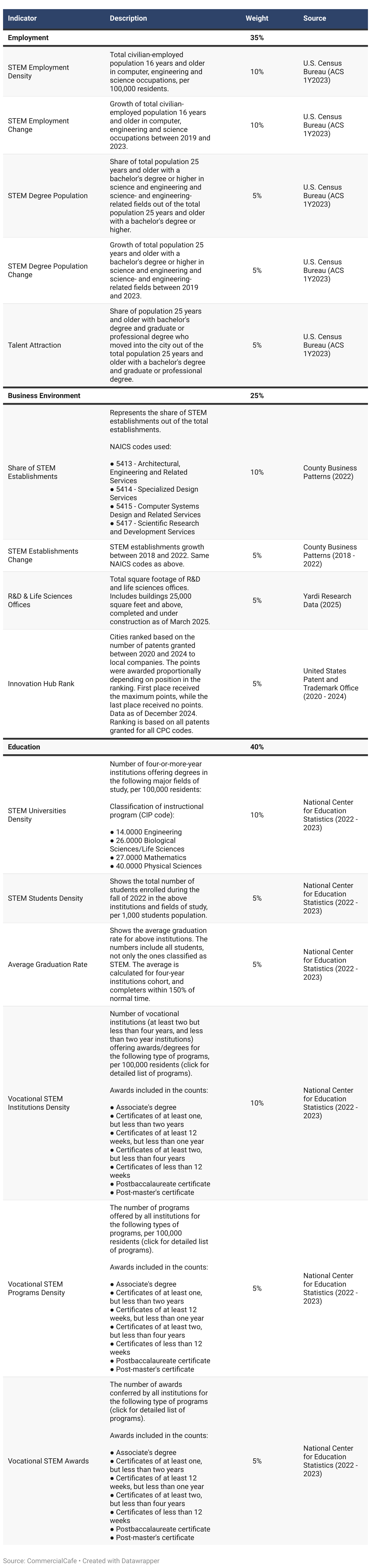
Having previously identified the 20 leading innovation hubs in the South, Midwest and West, this final installment in our nationwide series now delves into the dynamic landscape of the Northeast. Utilizing 15 carefully selected indicators broadly categorized by employment, business environment and education infrastructure, we unveil the cities where innovation truly thrives.
Here are some of our findings:
- Cambridge, Mass., builds its name as Northeast’s #1 innovation hub for STEM talent & infrastructure
- Northeast’s fastest-growing STEM workforce, Syracuse, N.Y., leads with 78%
- Cambridge, Mass., & Allentown, Pa., see largest influxes of college-educated newcomers
- Newark, N.J., is #1 in STEM business growth, following a 19% hike
- Cambridge, Mass., & Boston dwarf New York and Philadelphia in life sciences office inventories
- 16,177 patents: New York City towers above Northeast in total output
- Lowell, Mass., stands out for STEM student density, along with two other Massachusetts entries
- Cambridge, Mass.; Syracuse, N.Y.; & Pittsburgh set high graduation benchmarks
- Skilled trades resurgence: Pittsburgh; Rochester, N.Y.; & Syracuse, N.Y., top vocational STEM density
Cambridge, Mass.: Northeast’s Leader in Innovation, Fueled by Influx of Top Talent & Unmatched R&D Infrastructure
A look at the overall regional ranking immediately reveals the dominant position of Cambridge, Mass. No other entry across the Northeast managed as many top finishes as this city, which aced both its employment and business composite metrics. Specifically, the city earned plaudits for its share of STEM establishments, while also boasting the highest density of people working for STEM businesses.
On top of that, Cambridge has the highest share of science and technology graduates, as well as the most significant share of highly educated professionals that have recently moved to the city. As a testament to the quality of talent it attracts, Cambridge can also boast the highest average graduation rate across the entire region, as well as the largest stock of R&D and life sciences infrastructure to accommodate its expanding pool of highly skilled workers.
In second place, Worcester Mass., recorded the highest regional percentage increase in its STEM workforce between 2019 and 2023. While this was the city’s only top finish, Worcester picked up valuable points by ranking high across several key indicators, especially the ones pertaining to the education index. For instance, it had the second-highest ratio of STEM universities per 100,000 residents and the third-highest STEM enrollment density. It also had the third-highest share of residents with a degree in these fields.
Next, Pittsburgh stood out for its share of vocational STEM programs (1st place), as well as institutions providing these programs (2nd place) — a testament to Steel City’s tradition of hands-on, practical approaches to technological innovation. Pittsburgh also handed out the third-highest number of certifications for vocational STEM graduates.
New Haven, Conn., and Boston wrapped up the top five with the former’s standout performances coming for its share of STEM graduates within its workforce (2nd place) and the latter for its stock of R&D and life sciences buildings and STEM business density (2nd place for both).
Then, a New York trio of Syracuse, Rochester, and Albany occupy the next spots on our list ahead of Buffalo — which placed just outside of the top half of the table at #11 — before New York City (15th place). Syracuse boasted the highest increase in STEM employment among entries and the second-highest graduation rates, while Rochester came in seventh for the highest number of patents issued between 2020 and 2024. Albany stood out for its ratio of STEM universities per 100,000 residents, the highest across the entire region.
Employment (click to expand)
With 18,723 out of every 100,000 residents working in STEM, Cambridge, Mass., leads across the Northeast for the employment density metric, boasting more than double the rate of the runner-up, Pittsburgh. Already home to major companies in the industry — such as Biogen, Alnylam Pharmaceuticals and Sanofi — the New England city has witnessed a 42% jump in its share of science and engineering workers between 2019 and 2023. In addition, last year, pharmaceutical and biotech giant Astra Zeneca announced its plans for a new, 570,000-square-foot R&D facility in Cambridge’s Kendall Square.
Next, Pittsburgh placed second with roughly 7,155 out of every 100,000 residents employed in science and engineering jobs. Here, city-wide employment in STEM increased 8% across a five-year period with companies such as Astrobotic, Duolingo, and the University of Pittsburgh Medical Center attracting top local and out-of-state talent. At the same time, lower operational costs and average asking rents for office and industrial spaces provide an important advantage for businesses active in Pittsburgh.
In third place, Jersey City, N.J., had a similar STEM employment density to Pittsburgh, although the pace of growth over the surveyed period was more significant at 12%. And, with companies such as Samsung, Panasonic, and Audible being part of the local business ecosystem, Jersey City is an important destination for cybersecurity, fintech and AI specialists.
Notably, Massachusetts plays a pivotal role in STEM employment throughout the Northeast with no fewer than three entries within the top five. In addition to Cambridge, Quincy and Boston also made the cut. While Quincy’s point tally across all metrics we analyzed landed it in 19th place, the city boasted an impressive 6,989 STEM employers to every 100,000 residents — higher than similar cities in terms of population size, such as Stamford, Conn., and New Haven, Conn.
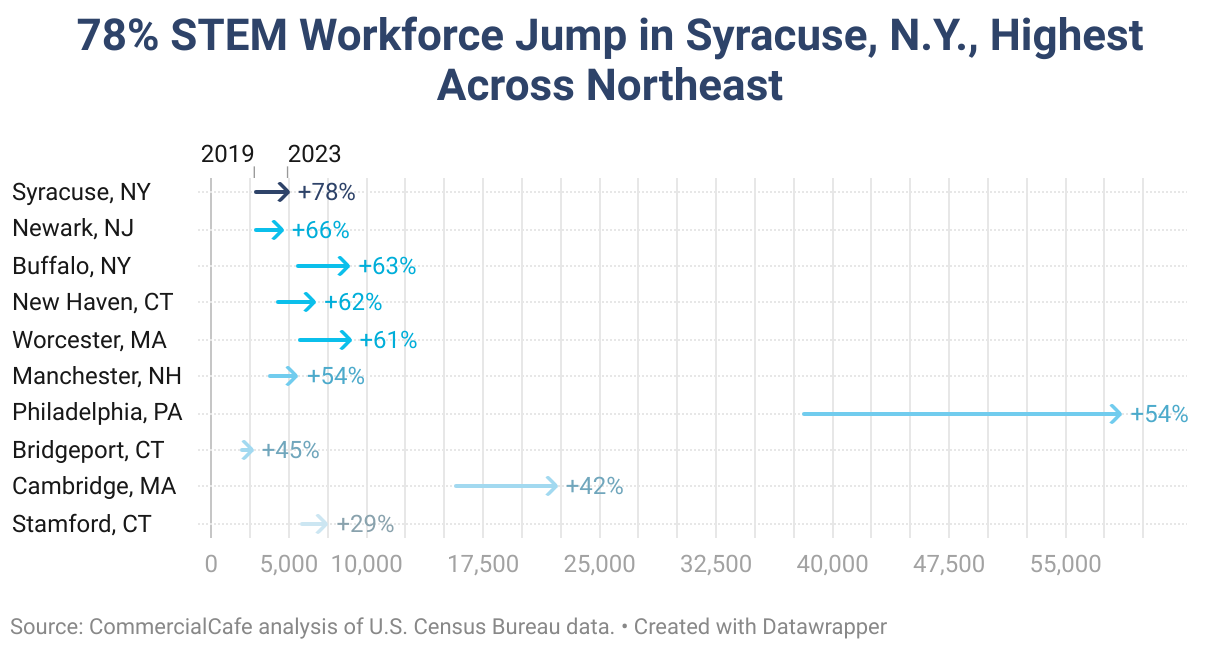
When we focus on top performers in terms of percentage increases (between 2019 and 2023), we find Syracuse, N.Y., heading the list with 78%. That’s more than a 10-point lead on another Mid-Atlantic entry in second place, Newark, N.J., which had a 66% increase in its STEM workforce. Wrapping up the top three, Buffalo, N.Y., clocked in with 63%.
Although impressive, these percentage increases need to be viewed within the regional context. For example, both Syracuse and Buffalo — along with Rochester, N.Y. — are part of New York’s I-90 corridor. Despite its historical reputation as a breeding ground for influential American companies, as well as its wealth of resources and ingenuity, these cities have been struggling in recent decades with low lending and investment levels, which affects their ability to retain and sustain local businesses.
Fortunately, efforts have been made to address some of these challenges. For instance, in early 2024, the region collectively earned the prestigious Tech Hubs Designation, securing substantial federal funding and attracting significant private sector investment, particularly in new manufacturing initiatives.
Meanwhile, sporting a slightly lower percentage growth (but one that is nonetheless impressive in terms of the number of workers added), Philadelphia upped its STEM labor force by 54%. This translated into an increase of roughly 20,500 professionals between 2019 and 2023.
Otherwise, Cambridge, Mass.’s 42% hike across the same period meant an additional 6,575 STEM workers, outpacing Boston for the same metric in both percentage and real numbers growth: Boston’s STEM workforce increased by 2,000 people following a 5% uptick.
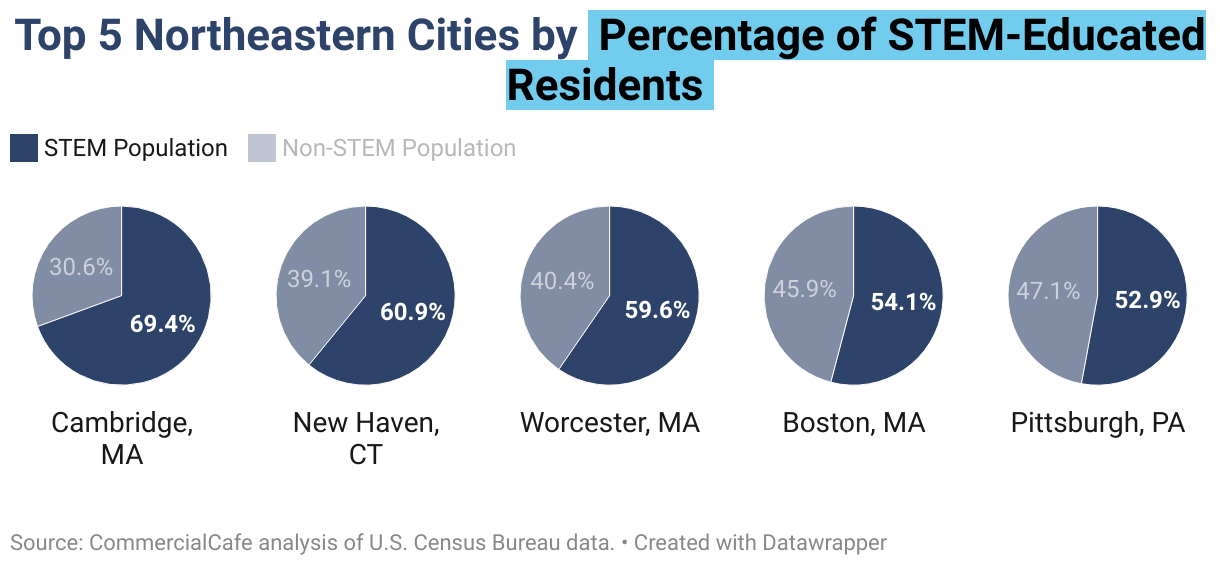
A first look immediately reveals the prominent place taken up by Massachusetts entries for this metric, due to both the presence of some of the nation’s top higher education institutions within their limits, as well as the state’s high density of STEM-employed residents. At 21%, Massachusetts’ seven points above the national average means that, given the numerous job opportunities, there are good reasons for those wrapping up their studies to stay put and start their careers and lives in the area.
Unsurprisingly as the home of MIT, Cambridge, Mass., boasts the highest percentage of STEM-educated individuals among its residents. Standing at 69%, it increased by roughly 10% between 2019 and 2023.
However, that’s a relatively modest uptick compared to second-placed New Haven, Conn.’s 29% across the same period. The jump brings the share of the city’s STEM graduates to approximately 61% of the total (or nearly 20,000 residents), according to the most recent available data.
Then, with 60%, Worcester, Mass., came in third for the percentage of science and engineering graduates among its ranks. Remarkably, the city witnessed an outstanding 92% surge in its STEM-educated population during the surveyed period with heavy recruitment from biomanufacturing and pharmacological firms, such as AbbVie and Mustang Bio.
Among the largest Northeastern cities, Boston and Pittsburgh had the most significant percentages of science and engineering graduates — at 54% and 53%, respectively — while both Philadelphia and New York City recorded roughly 45%.
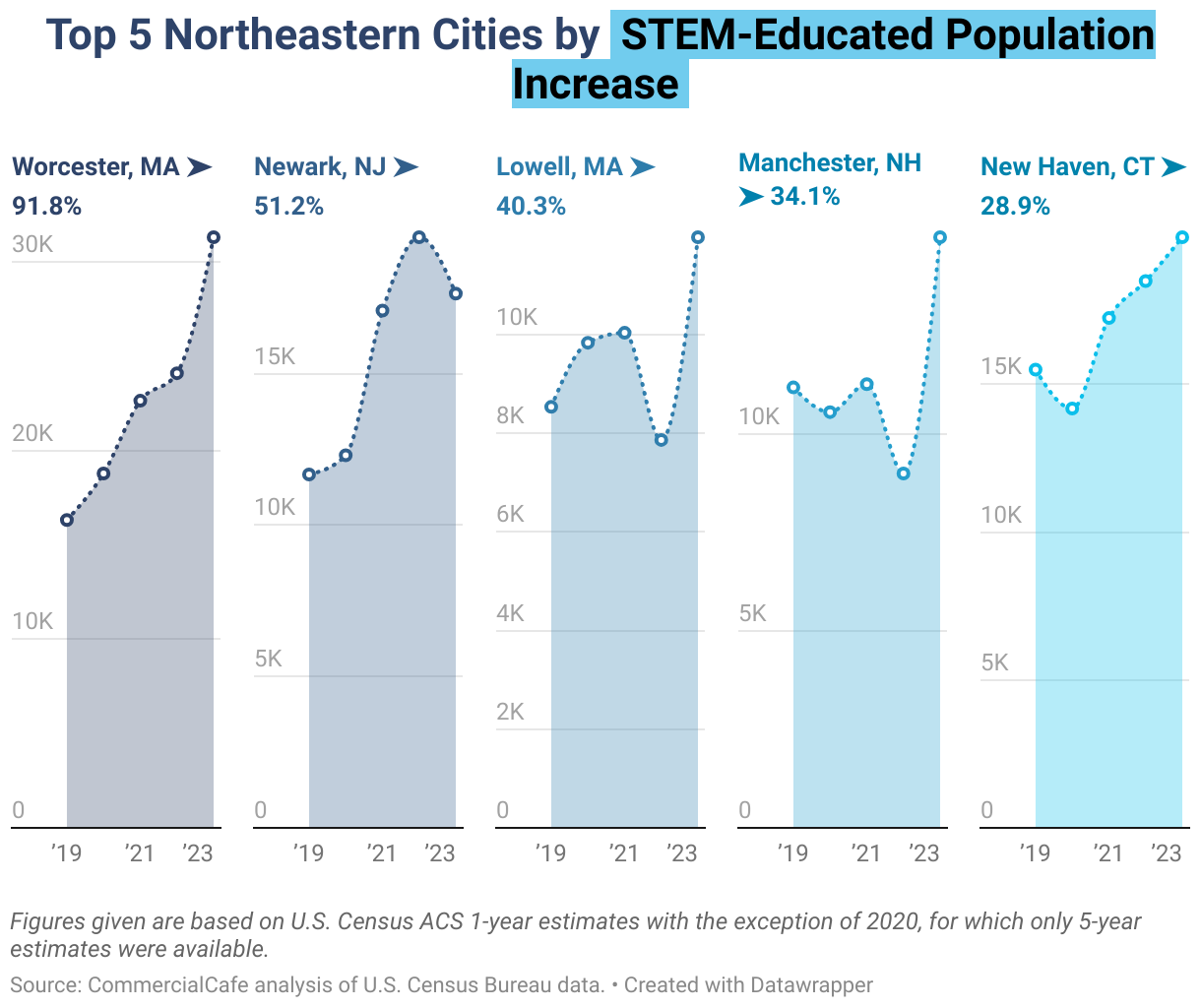
To be precise, Worcester, Mass., was the standout performer in terms of the expansion of the STEM-educated workforce with its 92% increase. The pool of science and engineering specialists in the city rose from 16,332 in 2019 to almost double that in 2023.
In second place, Newark, N.J., also stood out in terms of a sharp rise in the share of its STEM-educated population: The city’s number of graduates went from just over 11,000 before the onset of the pandemic to 17,647 in 2023, marking a 51% increase that neatly correlates with the similarly robust growth of the STEM employment in Newark, N.J.
Next, and following a 40% increase, Lowell, Mass., increased its highly skilled workforce with an additional 3,441 STEM graduates to reach a total of roughly 12,000 at the end of the period surveyed.
Once again, Cambridge, Mass., stands at the forefront, this time for the highest percentage of educated professionals who have recently moved to the city. According to U.S. Census Bureau data, nearly half of the total number of college-educated people in Cambridge are new arrivals. No surprises there as the Massachusetts city has been one of the main beneficiaries of the post-pandemic boom within the life sciences sector.
It’s important to note that the data included for this indicator is limited to 2022-2023, a point at which venture capital investment showed signs of a slowdown in the greater Boston area after years of exuberance around the life sciences sector. Now, STEM companies are facing new challenges from the uncertainty tied to upcoming tariffs, lower levels of funding and changing CDC guidelines.
In second place, 48% of people 25 years or older with a bachelor’s degree in Allentown, Pa., came from outside of the city. In this case, Allentown is home to the Lehigh Valley Health Network, which provides attractive employment opportunities for various health care professionals. The company was the largest employer across the metropolitan area prior to the 2024 merger with Jefferson Health.
Otherwise, Syracuse, N.Y., and New Haven, Conn., are the only other Northeastern entries that boast talent attraction percentages above the 40% mark. The two cities rely on a combination of health care, biotech, and advanced manufacturing to retain and attract top STEM talent.
Syracuse’s efforts to make a name for itself in the semiconductors sector are key to attracting science and engineering professionals to the city, while the State University of New York offers a range of options for workers engaged in health care, as well as research and development activities.
Similarly, in New Haven, Conn., pharmaceutical companies such as Alexion and Biohaven are part of a developing biotech industry that’s also closely linked to the Yale New Haven Health System. In addition, while not as broad as Syracuse’s manufacturing base, New Haven also produces specialized aerospace, medical and other high-tech equipment.
Business Environment (click to expand)
For several years, Cambridge’s Kendall Square has been a magnet for leading biotech and other STEM companies — including the likes of Moderna, Vertex and Genzyme — looking to establish their presence and grow their businesses amid one of the nation’s leading ecosystems for scientific innovation.
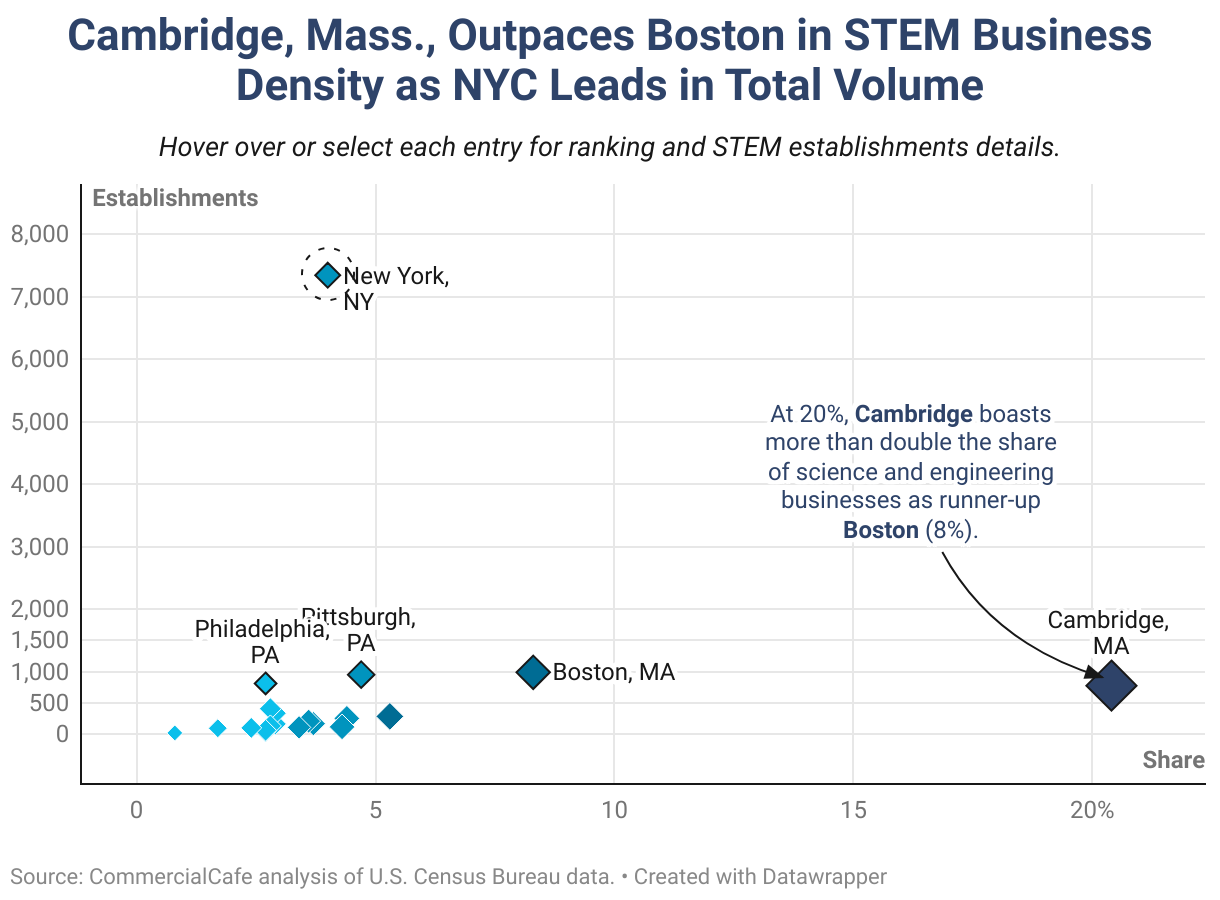
As a result, the city not only tops the ranking in terms of STEM establishment density, but it also blows the competition out of the water: At 20%, Cambridge boasts more than double the share of science and engineering businesses as runner-up Boston (8%).
As usual when dealing with cities that have different population sizes, it’s important to highlight the numbers behind these percentages to get a better feel for the comparative scale of STEM business ecosystems across various locations. For example, while life sciences and other related companies hold a much more dominant position relative to Cambridge’s local economy than in any other Northeastern city we analyzed, the total number of businesses that fall under this category (774) is still lower than they are in Boston (987), Pittsburgh (950) and Philadelphia (809).
Naturally, New York stands in a league of its own with 7,341 STEM establishments that make up roughly 4% of its total businesses.
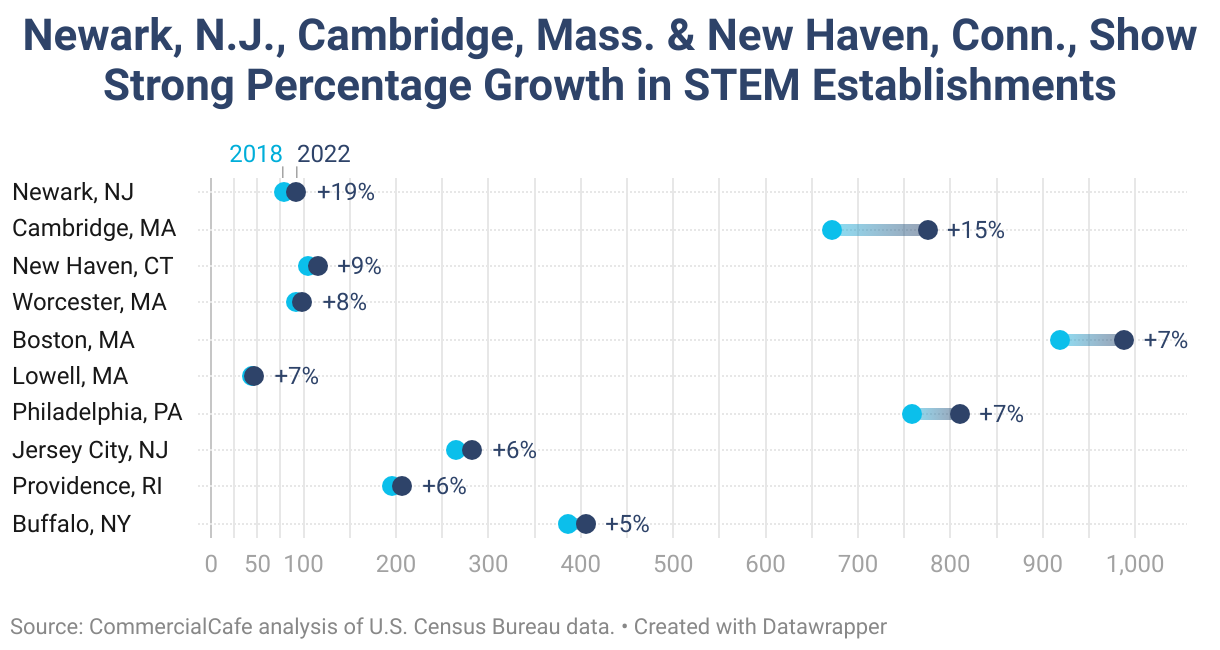
In terms of percentage increase of STEM establishments, Newark, N.J., came out on top following a 19% hike between 2018 and 2022. However, because the baseline for the city is significantly lower than it is in the other Northeastern entries, its total number of establishments in this category (as of 2022) was still below 100. We see a similar pattern in New Haven, Conn., and Worcester, Mass.
Then, a 15% increase in the share of STEM businesses in its local economy is what secured a second-place finish for Cambridge, adding to the Massachusetts city’s growing list of top performances in this analysis.
Not to be outdone, Boston and Philadelphia both recorded 7% increases in their STEM establishments during the surveyed period.
STEM business growth is heavily reliant on the necessary infrastructure — whether it’s medical offices, research labs or other life sciences workspaces. Accordingly, cities that already have strong commercial real estate markets that drive demand for new construction or renovations of existing spaces are at a clear advantage as they’re the most well-equipped to meet the needs of growing businesses.
It follows, then, that Cambridge, Mass., and Boston are front-runners with a significant lead, even compared to the likes of New York City. Specifically, life sciences office space in Cambridge — which includes both completed buildings, as well as properties currently under construction — totaled roughly 15.7 million square feet as of March 2025. Next, Boston office space added up to 12 million square feet.
By comparison, both Philadelphia and New York City office space inventories — ranked third and fourth, respectively, for the size of their life sciences facilities— had less than one-third of that (4.4 million and 4.3 million square feet, respectively).
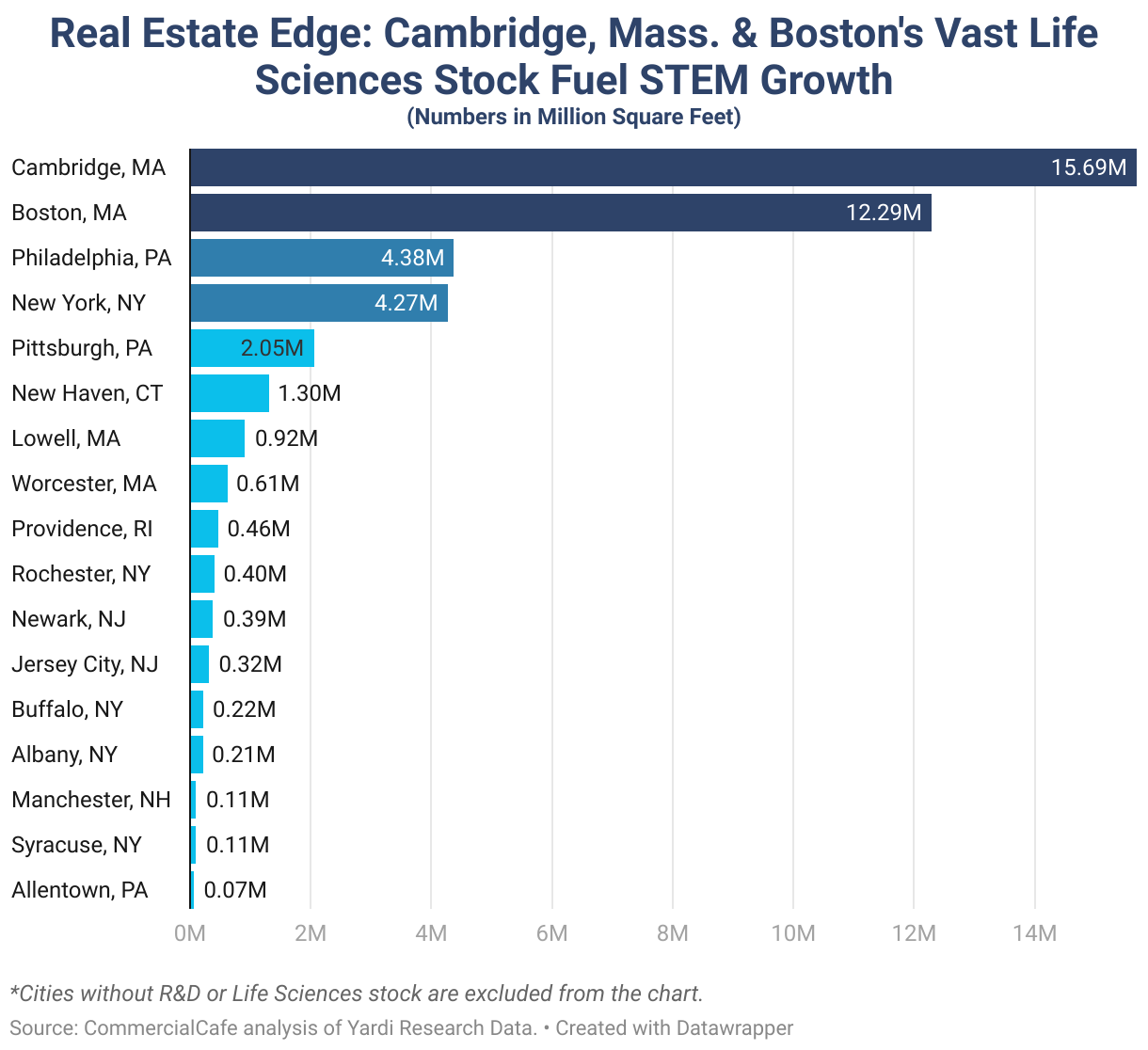
Pittsburgh and New Haven, Conn., are the only other entries that boast an R&D infrastructure that surpasses the 1-million-square-foot mark. That said, there are various reasons behind the relatively modest stock of specialized STEM workspaces in Northeastern cities. For places such as Newark, N.J., that demonstrate robust employment and business growth in this sector, the limited construction of R&D spaces is at least partly due to the city’s proximity to New York. Once companies grow beyond a certain point, it’s more likely for them to make the jump to cities with established infrastructure, rather than wait for enough demand and momentum to be generated locally for more development.
It’s worth mentioning that the likes of Stamford, Conn.; Quincy, Mass.; and Bridgeport, Conn.; aren’t included in the ranking at all because (at the time of this report) they had no significant life sciences or R&D inventories.
So far, the analysis has emphasized the progress made by some of the smaller Northeastern cities that have built on their academic infrastructure, lower living costs, and local government measures that encouraged STEM education and business creation to carve out a place in the research and life sciences ecosystem.
However, when it comes to measuring a city’s capacity for innovation through its patent production, New York City rises far above any local competition due to its size and legacy: At more than 16,177 patents issued between 2020 and 2024, it towers above runners-up Cambridge, Mass., and Boston.
The range of domains covered by patents issued in New York — including biotechnology; pharmaceuticals; medical devices and digital health; data analytics; cybersecurity; fintech and so on — is also broader than it is in any other city on the list.
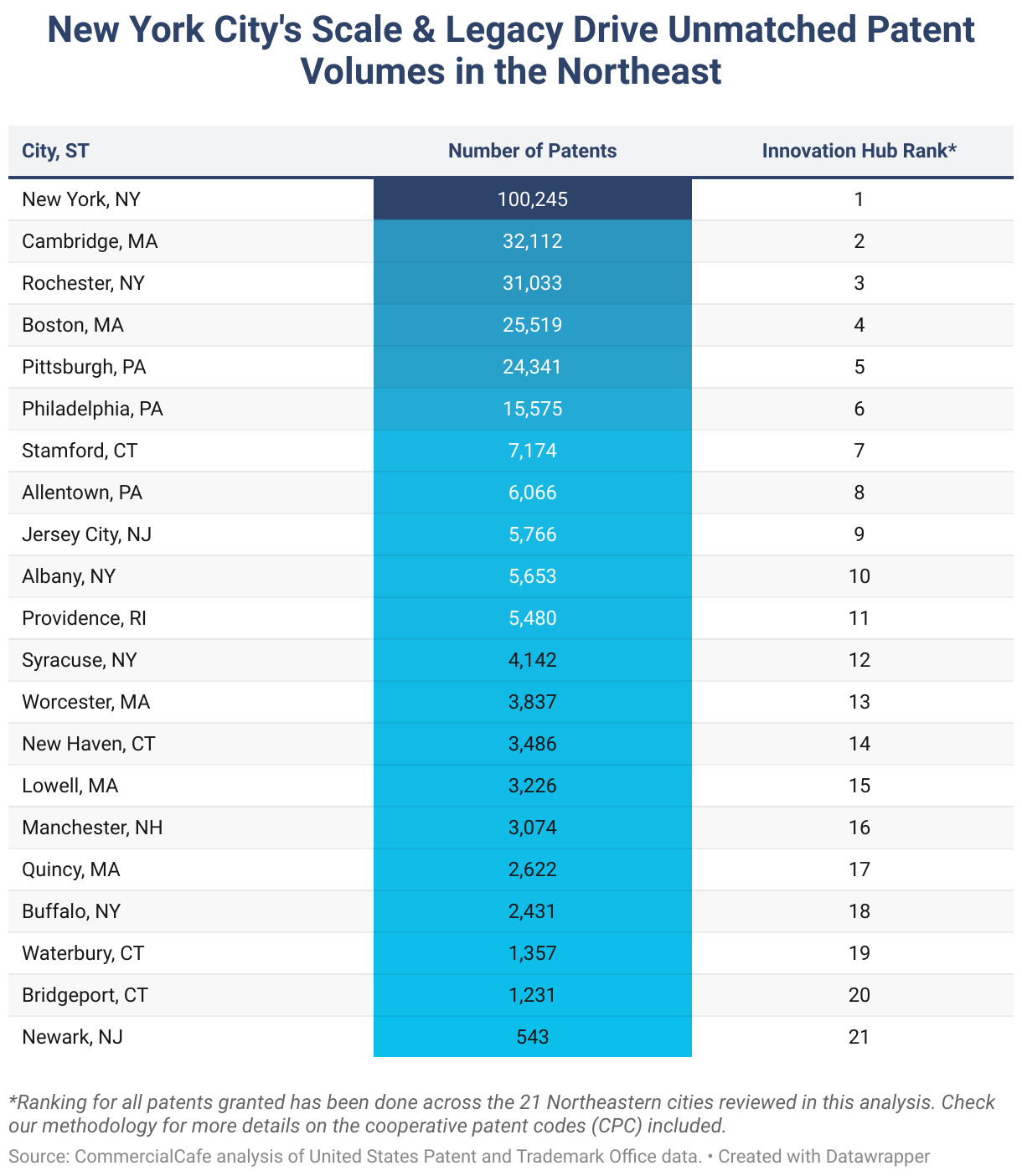
Besides the obvious focus on biotechnology, Cambridge, Mass., has also issued patents for innovations across areas such as robotics, gene therapy, advanced materials and nanotechnology, as well as cleantech.
Then, Boston ranks second with 6,481 patents to its name. Here, medical technology and pharmaceuticals make up a sizable amount of the total with the Boston Scientific Corporation as one of the leading patent holders, along with AI-assisted digital health solutions (Biofourmis, Akili Interactive and SOPHIA GENETICS).
Meanwhile, as the former home of Kodak Eastman, Rochester, N.Y., continues to be a leader in optics and photonics innovation. Patents issued for manufacturing medical devices and advanced materials also contributed to the city’s 974 total between 2020 and 2024.
Education (click to expand)
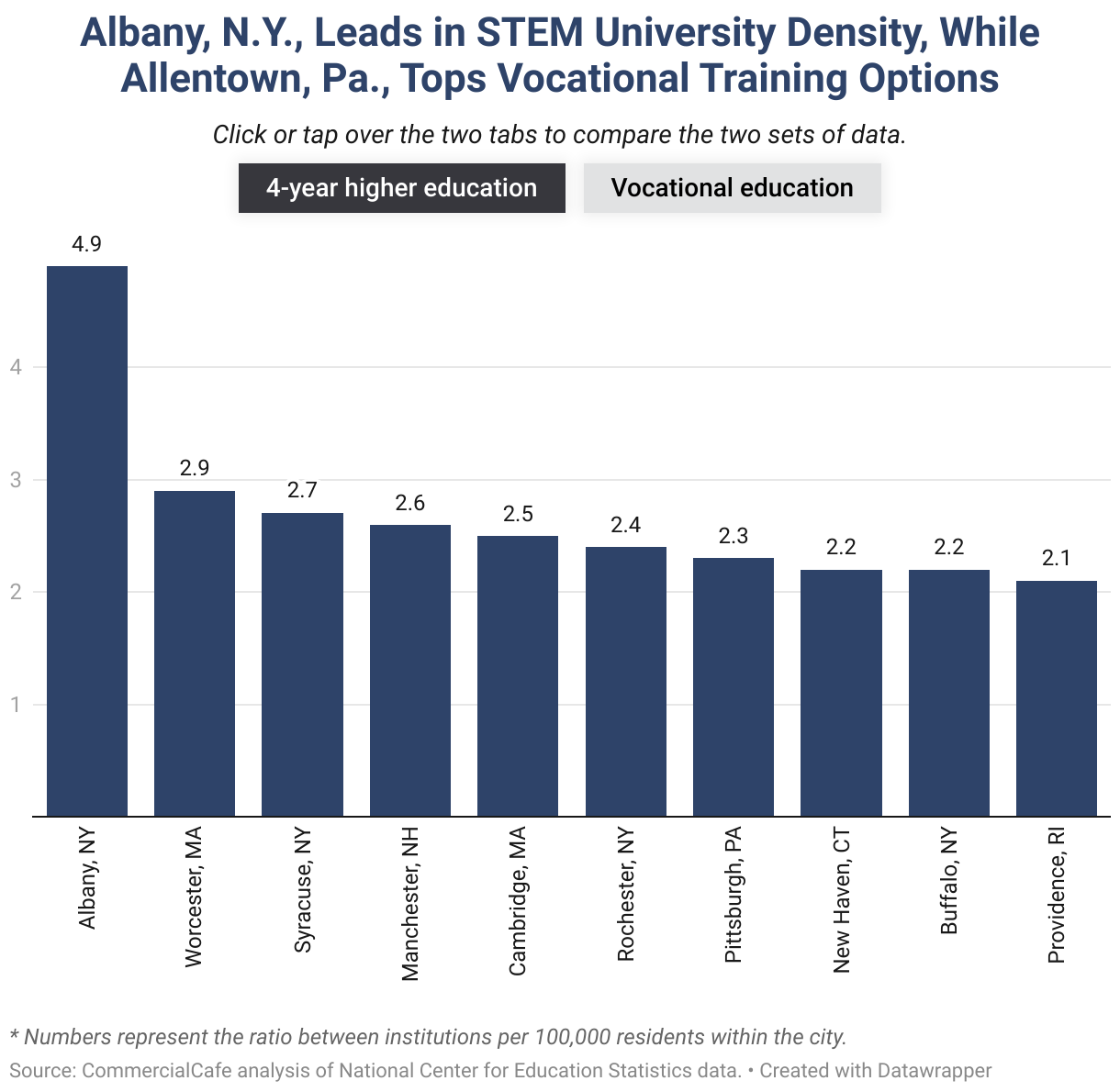
With nearly five higher learning institutions per 100,000 residents, Albany, N.Y., heads the ranking in terms of STEM university density. At some distance, we find Worchester, Mass., in second place with roughly three universities per 100,000 residents. Then, density values across the remainder of the top half of the list are extremely close.
In terms of vocational training options within STEM, the pattern is somewhat similar, at least at the top of the ranking, this time with Allentown, Pa., in pole position (2.4 vocational institutions per 100,000 residents). Pittsburgh and Bridgeport, Conn., make up the rest of the podium with 1.6 and 1.4 vocational STEM institutions, respectively, per 100,000 residents.
Three Massachusetts entries are at the forefront of the STEM student density indicator, which counts enrollment numbers as of fall 2022 across various science and technology-related courses (see details in our methodology).
First, the University of Massachusetts Lowell is known for its strong engineering and computer science programs and provides the city with a substantial student body focused on STEM. According to data gathered by the National Center Education Statistics, roughly 255 out of every 1,000 students in Lowell are enrolled in STEM courses.
Of course, the prestige of MIT and Harvard — particularly it’s more STEM-focused departments, such as Harvard Medical School and John A. Paulson School of Engineering and Applied Sciences — is a big draw for those conducting their studies in Cambridge, Mass. Some 217 out of every 1,000 student enrollments in the city target STEM programs — particularly engineering, applied sciences and biomedical technologies.
Notably, the Worcester Polytechnic Institute is the city’s main draw when it comes to science and engineering studies, but the likes of Worcester State University and Clark University also provide a range of programs — from environmental science to chemistry and computer science.
Cambridge, Mass., is home to some of the most selective and high-performing universities in the world, which significantly skews its “average” upwards when compared to the nationwide rates, especially when focusing on four-year graduation averages. Based on NCES data and other educational research bodies, the U.S. average graduation rate typically hovers around 40% to 45% (roughly half of that in Cambridge, Mass.).
While second- and third-place Syracuse, N.Y., and Pittsburgh have a wider array of colleges and universities than Cambridge (some of which may have lower overall rates), the presence of large, highly selective and high-performing institutions — such as Syracuse University, the University of Pittsburgh or Carnegie Melon — create a similar scenario, driving up average graduation rates to 80% to 81%.
Because the metric we employed to rank these cities relies on four-year cohorts, places such as Quincy, Mass.; Bridgeport, Conn.; or Jersey City, N.J., are at a disadvantage. Just as the presence of elite higher learning institutions in some places can skew the data on graduation rates, the same is true in the case of a city in which two-year community colleges are the only or the predominant educational options: Average four-year bachelor’s degree completion rates will appear very low.
It’s also worth remembering that community colleges typically serve a diverse student body, including many part-time students; working adults; students who need to complete remedial coursework; and those who plan to transfer, rather than complete a bachelor’s degree at that specific institution.
Those who wish to build a career in STEM need not necessarily take on the academic pathway, along with the financial burdens that go along with it. With demand for vocational training on the rise in the United States, cities that have a history of building upon the knowledge gathered through research have jumped at the opportunity to carve out a place for themselves as STEM vocational education hubs.
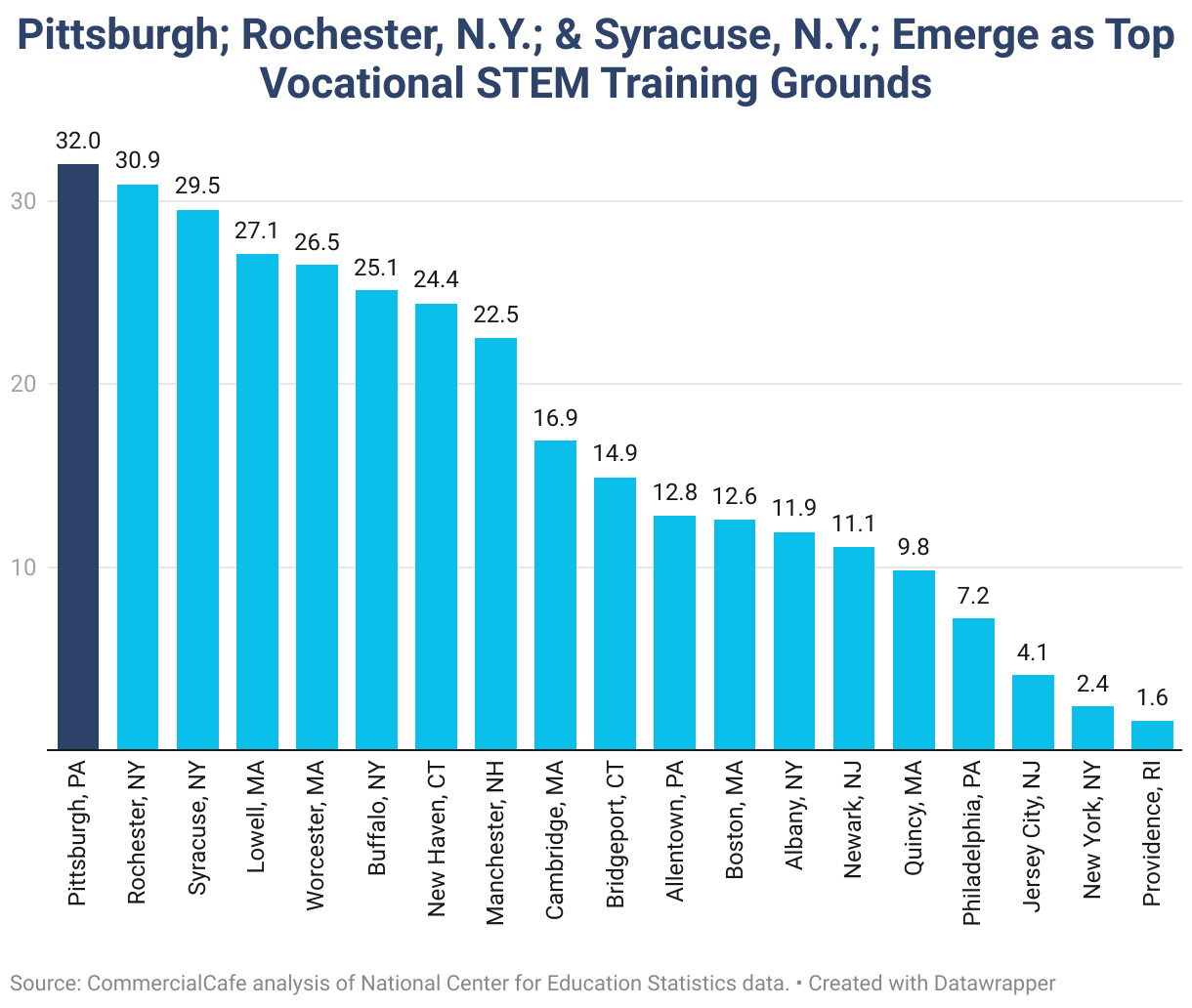
The top three entries for this ranking fit the bill: Previously known for its steel production, Pittsburgh currently boasts the highest ratio of vocational STEM program density across the Northeast (32 out of every every 100,000 residents) with courses on HVAC and refrigeration technology; electrical construction; mechatronics; and precision machining technology being among the most popular.
Next, Rochester, N.Y., came in second with roughly 31 vocational STEM programs per 100,000 residents. Vocational training here focuses on optical systems technology and photonics with the Rochester Institute of Technology also offering short courses and certificate programs in areas such as data analytics and cybersecurity.
Staying in New York, the ratio in Syracuse stands at 30 per 100,000. In this area, Onondaga Community College is the primary institution providing vocational and associate-level STEM training, providing courses on electrical and applied engineering; cybersecurity; network technology; medical laboratory; and radiologic technology.
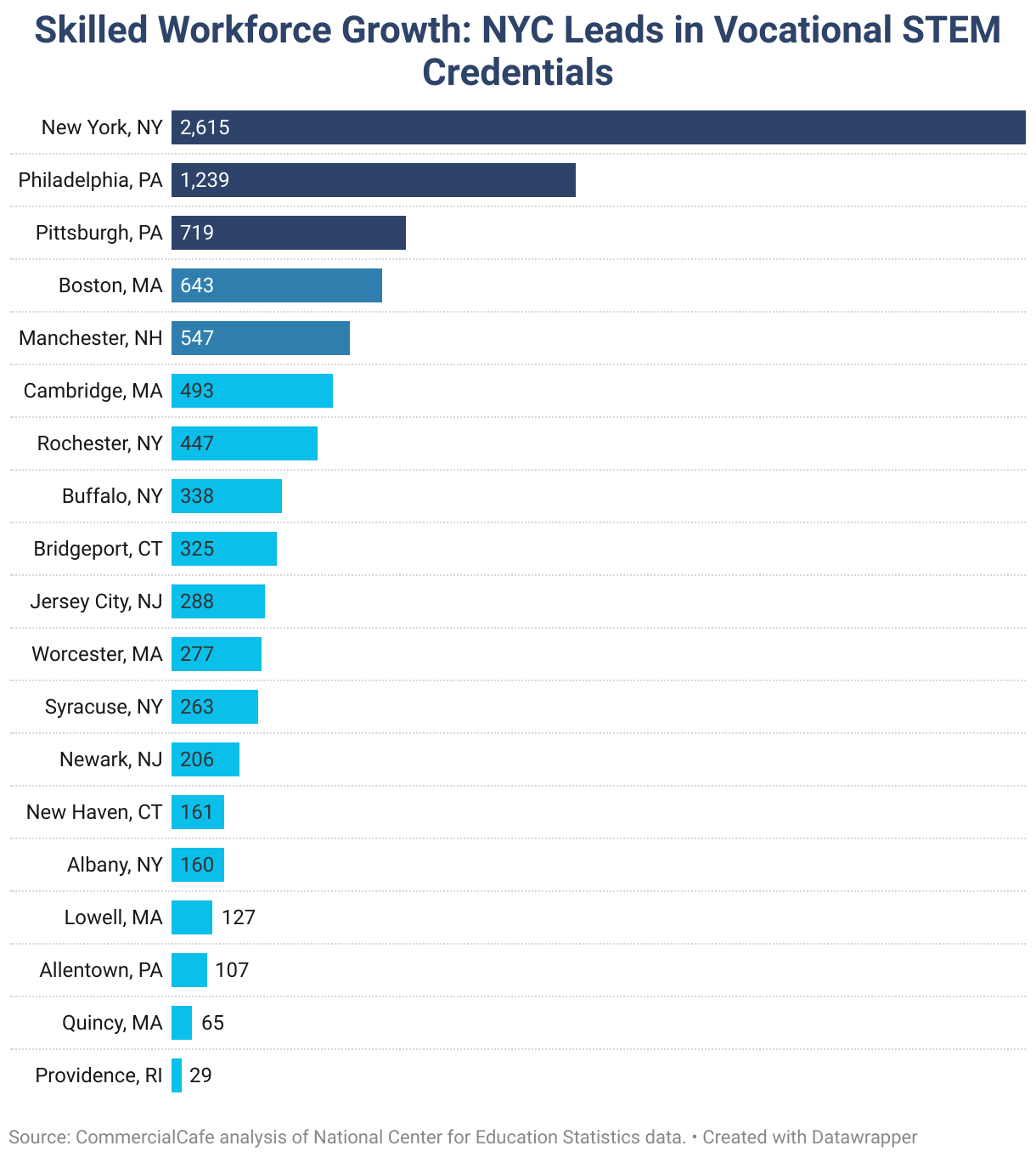
Boasting more than double the number of certificates awarded for graduates of vocational STEM courses than its runner-up, New York tops the ranking with 2,615 awards. In particular, City University of New York is the go-to institution for practical skills training in the Big Apple with its colleges strategically located across the boroughs and providing courses in health information technology, computer engineering and applied environmental science, among many others.
In second place, Philadelphia’s total came to 1,239 awards handed out between 2022 and 2023. Closing out the podium, Pittsburgh garnered 719. Across both cities, interest in welding is particularly high, as relatively short training programs can land graduates potentially lucrative jobs.
Methodology



Diana Sabau
Senior Content Writer, CRE News & Market Analysis
Drawing on years of intense research in the U.S. commercial real estate market at Yardi Matrix, Diana now applies her expertise as a writer for the CommercialCafe blog. Her articles focus on CRE investment, labor market trends, and technology, and have been picked up by prestigious publications including the New York Times, GlobeSt, The Real Deal, NAIOP, MSN, and Bisnow.